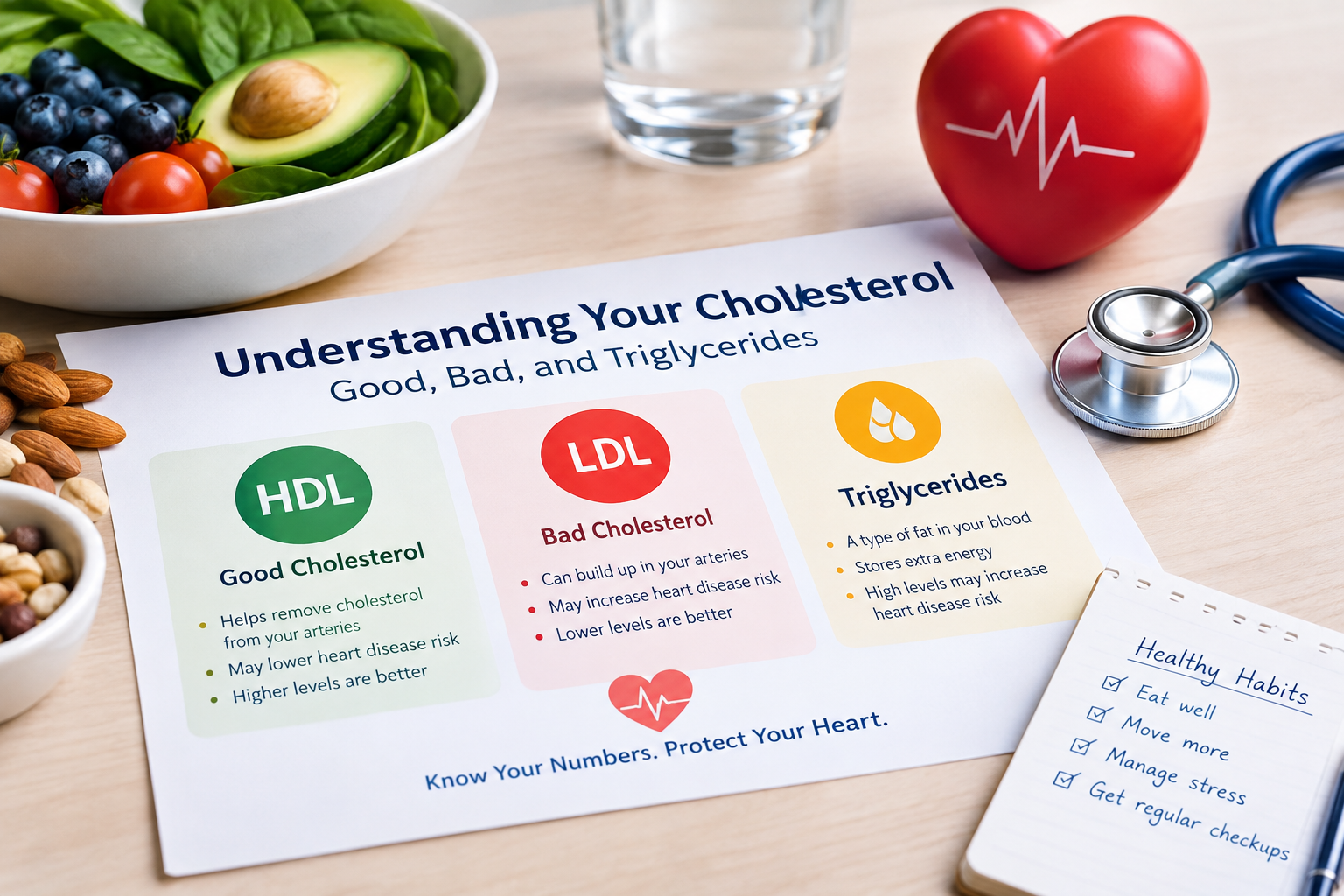
Cholesterol is often discussed as though it is simply “good” or “bad,” but your cholesterol numbers tell a more complete story. Understanding LDL cholesterol, HDL cholesterol, triglycerides, and your overall lipid profile can help you have more informed conversations about your heart health and preventive care.
For adults in Katy, TX and surrounding communities, routine health visits and appropriate cholesterol testing can be an important part of understanding cardiovascular risk. At QuCiL Health™, our approach to preventive and primary care focuses on looking at your overall health rather than treating a single number in isolation.
What Is Cholesterol?
Cholesterol is a waxy, fat-like substance that your body needs for important functions, including making hormones and maintaining cells. Your liver produces cholesterol, and additional cholesterol can come from foods of animal origin.
Because cholesterol travels through the bloodstream with proteins called lipoproteins, a cholesterol test looks at several different measurements rather than just one number.
High cholesterol frequently causes no noticeable symptoms. That is why a person can feel completely healthy while still having cholesterol levels that deserve attention. A blood test called a lipid panel can help reveal your cholesterol and triglyceride levels.
LDL Cholesterol: Why Is It Called “Bad” Cholesterol?
LDL stands for low-density lipoprotein. It is commonly called “bad” cholesterol because elevated LDL cholesterol can contribute to plaque buildup inside the arteries.
Over time, this buildup can contribute to atherosclerosis and increase the risk of cardiovascular problems, including heart attack and stroke.
However, there is not one LDL number that is appropriate for every person. Your individual LDL goal may depend on factors such as your age, medical history, diabetes status, family history, and whether you have previously experienced cardiovascular disease.
This is why interpreting an LDL result should involve more than simply asking whether the number is “high” or “low.” Your healthcare professional can help put the result into the context of your overall health.
HDL Cholesterol: What Is “Good” Cholesterol?
HDL stands for high-density lipoprotein and is commonly known as “good” cholesterol.
HDL helps transport cholesterol away from the arteries and back toward the liver, where it can be processed. Higher HDL levels have been associated with a lower risk of cardiovascular disease, but HDL should not be viewed as a number that can simply cancel out a high LDL level.
Current guidance emphasizes looking at the entire cardiovascular risk picture rather than trying to raise HDL by itself. Your healthcare professional can help explain what your HDL level means alongside your other results.
What Are Triglycerides?
Triglycerides are the most common type of fat in the body. Your body stores excess energy as triglycerides and releases them when energy is needed.
Triglycerides are another important part of a lipid panel. Elevated triglycerides can be particularly concerning when they occur alongside high LDL cholesterol or low HDL cholesterol.
A triglyceride level below 150 mg/dL is generally considered normal, although your healthcare professional will interpret your result alongside your other risk factors and health information.
Why Do Cholesterol and Triglycerides Matter?
Keeping track of your lipid levels is one part of maintaining cardiovascular health. Persistently unhealthy cholesterol levels can contribute to plaque buildup in the arteries, which may increase the risk of heart disease and stroke.
Your cholesterol results are only one part of the picture. Blood pressure, blood sugar, smoking status, family history, physical activity, diet, age, and other health conditions can also influence cardiovascular risk.
That is why preventive healthcare should focus on the whole person rather than a single laboratory result.
What Can Affect Cholesterol and Triglyceride Levels?
Several factors can influence your lipid levels, including genetics, dietary patterns, physical activity, tobacco exposure, body weight, certain medical conditions, and some medications.
For example, diets high in saturated fats can contribute to higher LDL cholesterol, while physical inactivity and diets high in added sugars or refined carbohydrates can contribute to unhealthy triglyceride levels.
Family history also matters. Some people inherit conditions that cause unusually high cholesterol and may require medical evaluation and treatment.
How Can You Support Healthy Cholesterol Levels?
Healthy cholesterol management is not about making extreme changes overnight. Sustainable habits can make an important difference over time.
- Choose more vegetables, fruits, whole grains, beans, nuts, and seeds.
- Choose sources of unsaturated fats in place of foods high in saturated fats.
- Include appropriate sources of lean protein and fish.
- Stay physically active according to your abilities and healthcare needs.
- Limit highly processed foods and foods high in added sugars.
- Avoid tobacco and exposure to secondhand smoke.
- Maintain regular preventive healthcare visits.
- Take prescribed medications exactly as directed by your healthcare professional.
Small, consistent lifestyle changes can be more sustainable than attempting to completely change your routine all at once.
What Is a Cholesterol or Lipid Panel?
A lipid panel is a blood test used to measure important blood fats and cholesterol measurements. Depending on the test, it may include total cholesterol, LDL cholesterol, HDL cholesterol, and triglycerides.
Some cholesterol tests may require fasting, while others may not. Your healthcare professional or laboratory will tell you whether you need to prepare in a specific way before testing.
Regular testing can help identify changes that may not cause any symptoms. Your healthcare professional can also recommend how frequently you should have your cholesterol checked based on your individual health history and cardiovascular risk.
Does a High Cholesterol Result Mean I Need Medication?
Not necessarily. Treatment decisions depend on the individual.
Your healthcare professional may consider your LDL level, triglycerides, blood pressure, diabetes status, family history, previous cardiovascular events, age, and other factors when determining the best approach.
For some people, lifestyle changes may be an important first step. Others may benefit from cholesterol-lowering medication in addition to healthy lifestyle habits.
The goal is not simply to chase a laboratory number. The goal is to reduce cardiovascular risk using a plan that is appropriate for your health.
When Should You Talk With a Healthcare Professional?
Consider discussing cholesterol testing with your healthcare professional if you have never had your cholesterol checked, have a family history of high cholesterol or early heart disease, have diabetes or high blood pressure, smoke, or have previously been told that your cholesterol or triglycerides are elevated.
If you already have cholesterol results, bringing them to your next primary care visit can help your healthcare professional determine what they mean in the context of your overall health.
Frequently Asked Questions About Cholesterol
What is the difference between LDL and HDL cholesterol?
LDL is commonly called “bad” cholesterol because elevated levels can contribute to plaque buildup in the arteries. HDL is commonly called “good” cholesterol because it helps transport cholesterol back toward the liver. Both are considered as part of an overall cardiovascular risk assessment.
Are triglycerides the same as cholesterol?
No. Cholesterol and triglycerides are different types of lipids. Cholesterol is used for important functions such as making hormones and maintaining cells, while triglycerides are a major form of stored energy in the body.
Can high cholesterol cause symptoms?
High cholesterol usually does not cause noticeable symptoms. A blood test is generally needed to identify unhealthy cholesterol levels.
What is a good triglyceride level?
A triglyceride level below 150 mg/dL is generally considered normal. However, your healthcare professional should interpret your result alongside your other cholesterol measurements and cardiovascular risk factors.
Can lifestyle changes improve cholesterol?
Yes. Heart-healthy eating patterns, regular physical activity, avoiding tobacco, and other sustainable lifestyle changes can support healthier cholesterol levels. Some people may also need medication depending on their individual risk.
How often should I get my cholesterol checked?
The appropriate testing schedule varies from person to person. Your healthcare professional can recommend a schedule based on your age, health history, family history, existing conditions, and cardiovascular risk.
Understanding Your Numbers Is the First Step
Cholesterol does not have to be confusing. Understanding the difference between LDL, HDL, and triglycerides can help you become more informed about your cardiovascular health.
If you are in Katy, TX or the surrounding area and want to better understand your cholesterol results or discuss preventive healthcare, consider speaking with a qualified healthcare professional.
QuCiL Health™ provides primary care and wellness-focused healthcare designed around your individual health needs. Our Katy location is at 3107 Elrod Rd, Suite G, Katy, TX 77494.
Regular preventive care can help you identify health concerns early and create a practical plan for maintaining your health over time.
Medical Disclaimer
This article is intended for general educational purposes and should not replace individualized medical advice, diagnosis, or treatment. Cholesterol goals and treatment recommendations vary between individuals. Speak with a qualified healthcare professional about your personal health and laboratory results.


Community Discussion 0
Privacy Notice
Please DO NOT share: Personal health information or contact details.
Comments are moderated to protect patient privacy.
Share Your Thoughts
No comments yet. Be the first to share your thoughts!